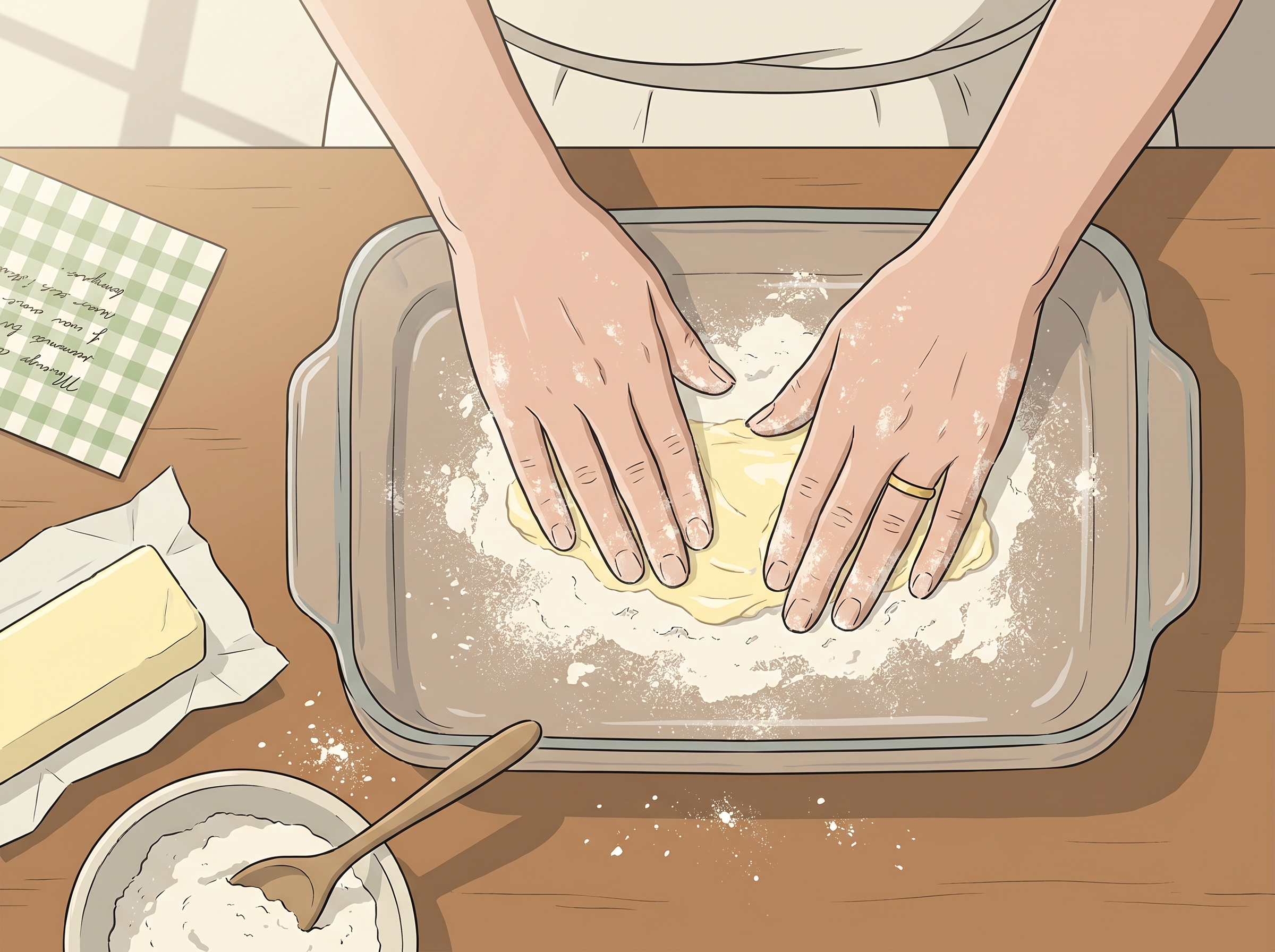
I was making banana bread this morning — Nana's recipe, paternal great-grandmother, transcribed by my mom — and Fred told me to spray the pan. I almost laughed out loud.
We don't spray the pan. We grease it and flour it. With our hands. The way Nana did.
And I told him: I've adapted to everything new thrown my way, but at my core I'm traditional.
That sentence wouldn't leave me alone for the rest of the morning.
The whole Chameleon Generation idea I've been working on says we adapted to every new thing they handed us. New tech, new economy, new family structures, new diagnoses, new vocabularies. We changed colors to match every wall they put us against.
But chameleons don't become the wall. They match it. The body underneath stays the same color.
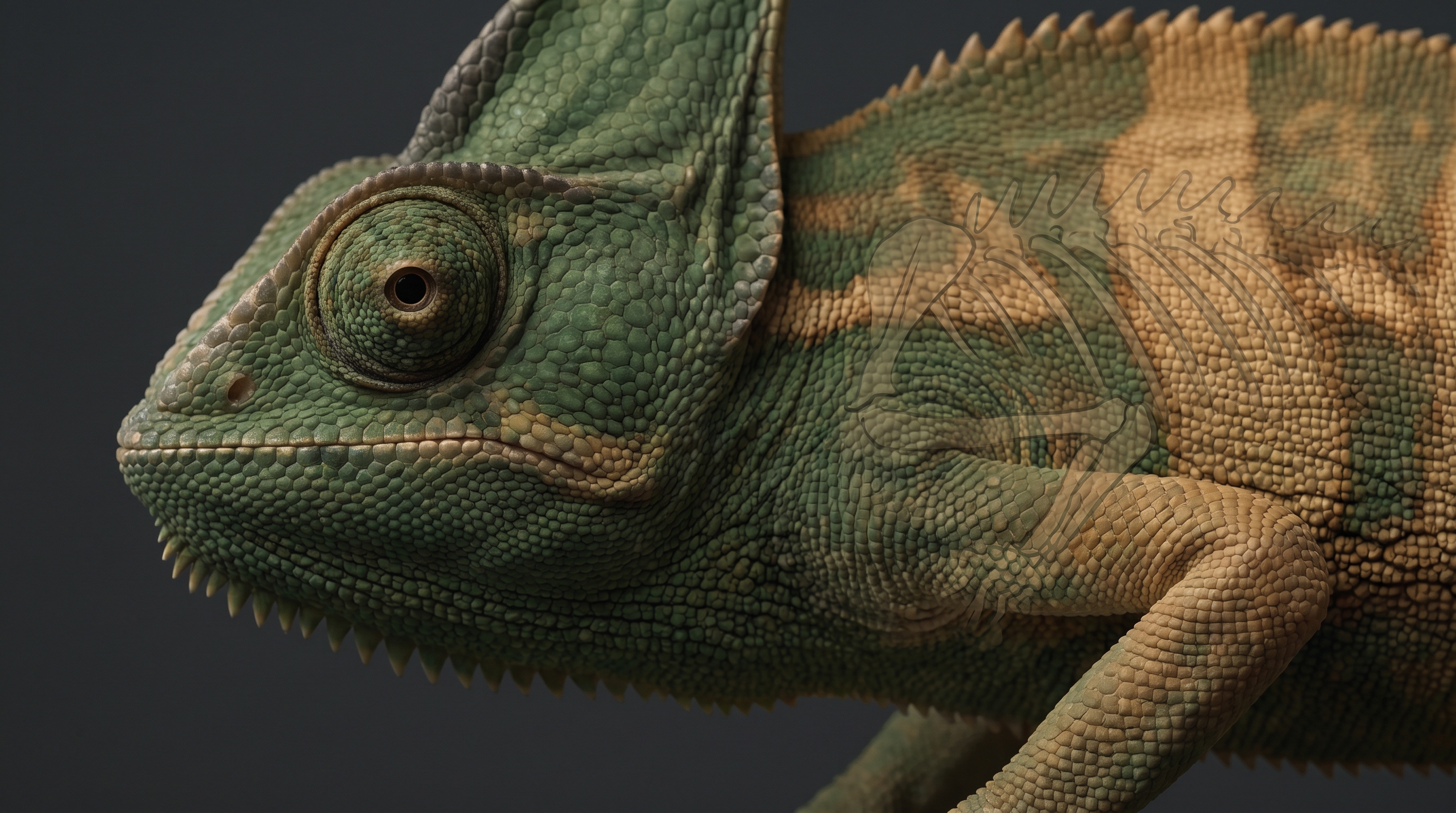
I think that's the part I missed when I was writing the founding piece. We weren't shapeshifters. We weren't rootless. We weren't — and aren't — empty.
We adapted outward to keep something inward from getting touched.
What didn't change for us, even when everything else did:
- We still grease and flour the pan.
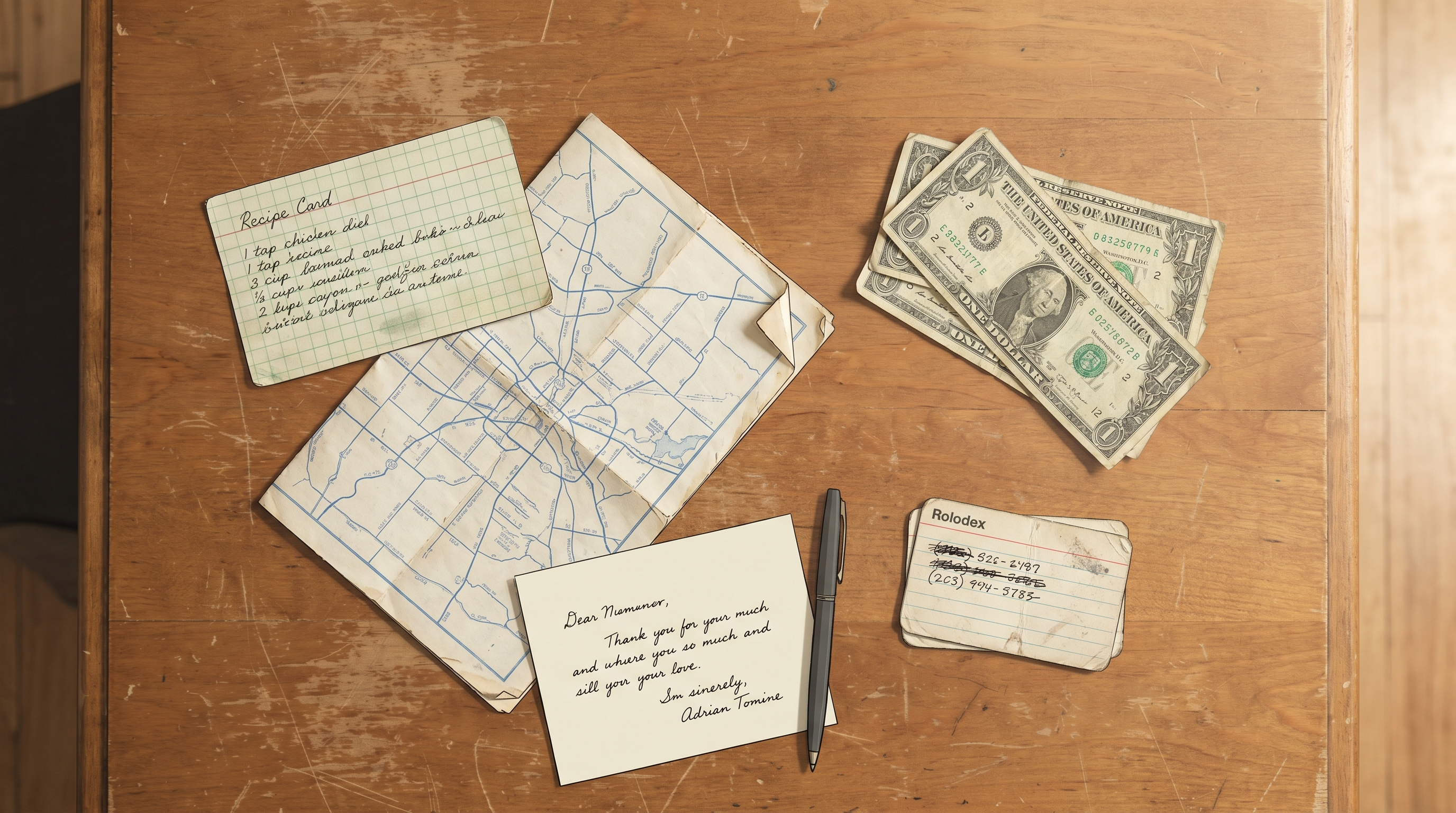
- We still write the card by hand for the people who matter.
- We still know our friends' phone numbers in our heads — at least the ones from before 2005.
- We still call the mechanic instead of using the app.
- We still know how to read a paper map. We still know how to fold one back up. (Nobody ever folds them back the right way the first time. That's part of the ritual.)
- We still tip in cash when we can.
- We still keep recipe cards. Sometimes in handwriting that doesn't belong to us anymore.
- We still know what side of the family a given casserole came from.
- We still send a thank-you note.
- We still know how to be quiet in a room.
The technology around all of this changed nine times. Most of these things, the technology replaced. The replacements are objectively faster, easier, cleaner.
We kept doing them anyway.
Not because we're stuck. Because we're anchored.
This is the part that distinguishes Gen X adaptation from the kind of cultural amnesia people accuse us of. Yes — we picked up every tool that got thrown at us. Yes — we taught ourselves to live on platforms that didn't exist when we were born. Yes — we let entire industries die under us and just learned new ones.
But we did it while also greasing the pan with our hands.
The wellness industry would call this dual processing. The therapy industry would call it integration. My grandmother would have called it having sense.
The chameleon's color changes because the world changes. The body underneath is still the body. The body underneath is what kept the recipe card. The body underneath is what knew, when an AI assistant said "spray the pan," that the AI assistant didn't know everything yet.
The recipe is going in the oven in five minutes. The pan is greased and floured. There's flour on the counter because there's always flour on the counter when you do it the right way.
Nana's been gone a long time.
She's still in the kitchen.